


The Koala


Koalas (Phascolarctos cinereus) are iconic Australian marsupials found across eastern and southeastern Australia, from the Cairns region in northern Queensland through New South Wales, the Australian Capital
Territory, Victoria, and South Australia. Although they are often called “koala bears," they are not bears. They are semi-arboreal marsupials and the only living member of the ancient marsupial family Phascolarctidae (DAWE, 2022). Koalas are closely associated with eucalypt forests and woodlands, feeding predominantly on leaves from trees in the genera Eucalyptus, Corymbia, and Angophora (DAWE, 2022).

The conservation status of koalas varies by region. Under Australian national environmental law, koalas are listed as endangered in Queensland, New South Wales, and the Australian Capital Territory. This listing reflects severe population decline and the combined effects of habitat loss, climate change, disease, bushfire, vehicle strikes, and dog attacks (DCCEEW, 2026). Globally, the IUCN lists the koala as Vulnerable (DAWE, 2022).
The greatest long-term threat to koalas is the loss, fragmentation, and degradation of habitat. Clearing for urban development, agriculture, grazing, mining, transport infrastructure, and forestry reduces the forests koalas need for food, shelter, and movement.

Fragmented landscapes also force koalas to travel across roads, backyards, and open ground, which increases their risk of vehicle strikes, dog attacks, and isolation from other breeding populations (DAWE, 2022; McAlpine et al., 2015).
Disease is another major conservation issue. Chlamydial disease, caused by Chlamydia pecorum, can lead to conjunctivitis, blindness, urinary tract disease, pneumonia, infertility, and death. Koala retrovirus, or KoRV, is also recognised as an important health concern. Disease impacts can be made worse when koalas are already stressed by habitat loss, poor nutrition, climate extremes, and urban pressures (DAWE, 2022; Quigley & Timms, 2020).

Climate change is expected to increase pressure on koalas, especially in hotter and drier inland regions. The National Recovery Plan identifies droughts and heatwaves as major climate-related threats, with some western populations at risk of severe decline or local extinction if high-emissions climate change continues. Climate change can also reduce climatically suitable habitat and affect the availability of preferred food and shelter trees (DAWE, 2022; Adams-Hosking et al., 2011; Briscoe et al., 2016).
Bushfire is also a serious threat, particularly where fires are large, severe, or repeated. Fire can directly kill or injure koalas, reduce food availability, change forest structure, and expose surviving animals to additional pressures after the fire, including dehydration, starvation, dog attack, vehicle strike, and disease stress. The impact of fire depends on severity, landscape connectivity, the availability of unburnt refuges, and the speed of habitat recovery (Beale, Youngentob & Marsh, 2022).

Conservation efforts focus on protecting and reconnecting koala habitat, restoring degraded landscapes, reducing vehicle and dog-related deaths, improving fire management, monitoring populations, supporting First Nations land management, and improving disease research and treatment. The National Recovery Plan aims to stop the decline of listed koala populations by building resilient, connected, and genetically healthy metapopulations across their range (DAWE, 2022; DCCEEW, 2025).
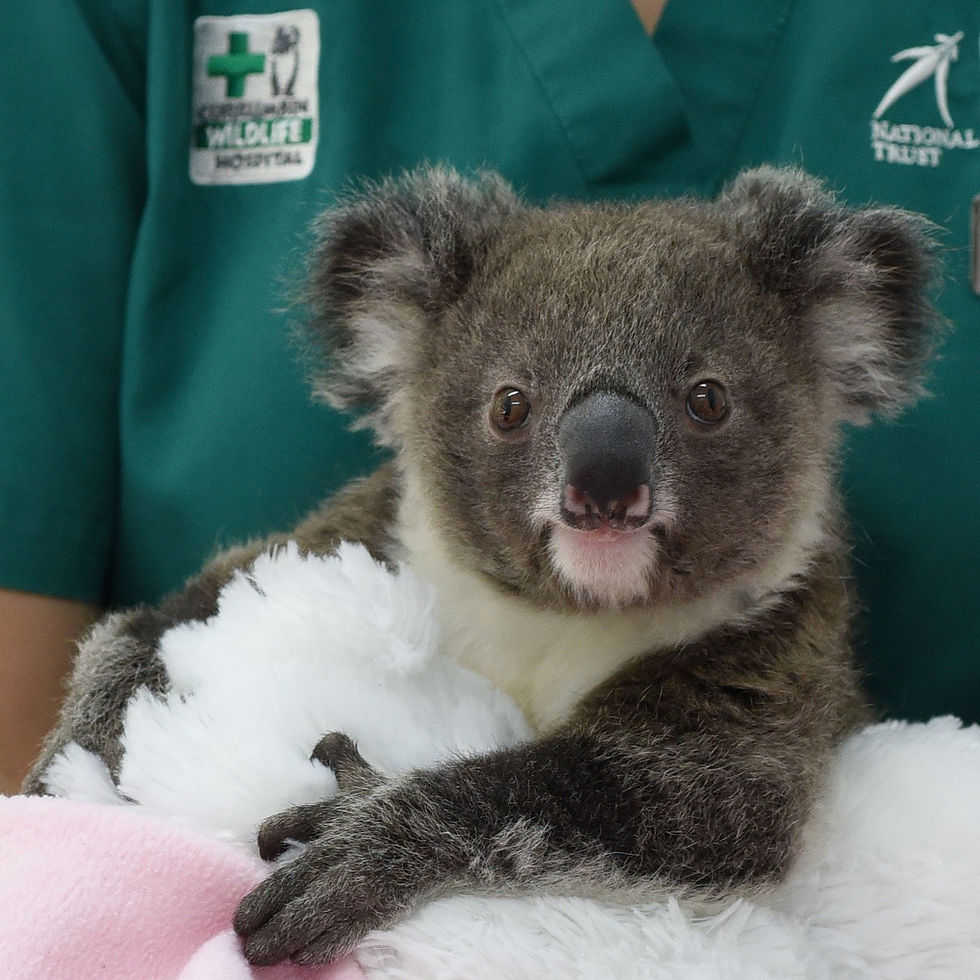
New disease-management tools are also emerging. National guidance has been released for koala chlamydia vaccination, and one vaccine has been approved for production and limited rollout under the APVMA minor-use category. However, vaccination should be presented carefully as one potential tool within broader conservation, not as a replacement for habitat protection, disease monitoring, and long-term landscape recovery (Wildlife Health Australia, 2025).
Protecting koalas means protecting the forests and woodlands they depend on. Their future relies not only on rescuing sick or injured individuals but also
on preserving large, connected, and healthy landscapes where koalas can feed, breed, and move safely for generations to come.


Comments